Axis deer have become one of the signature hunts in the Texas Hill Country, and for good reason. They’re strikingly beautiful, genuinely challenging to hunt, and produce some of the best venison of any game animal in North America. Unlike whitetail, axis hunting in Texas doesn’t run on a fixed calendar — which opens up options, but also means the “best” time and place to hunt depends on what a hunter is actually after.
Here’s a practical look at Texas Hill Country axis hunts: when to go, what to expect, and which ranches consistently deliver a quality experience.
Quick Answer
Axis deer are classified as exotic, non-game animals in Texas, which means they can be legally hunted year-round on private land with a valid Texas hunting license and landowner permission — there’s no closed season. The Hill Country holds the densest wild axis populations in the state, with the strongest hunting concentrated in counties like Kerr, where the species was first introduced in 1932. Most hunters get the best results during the May-to-August rut, when bucks are most active and their antlers are hard rather than in velvet, though winter hunts can also be productive as deer concentrate around limited food and water sources.
A Quick Background on Axis Deer in Texas
Axis deer, also called chital or spotted deer, are native to the Indian subcontinent. The first animals arrived in Kerr County in 1932, brought in as game for private Hill Country ranches. Over time, some escaped high fences and spread across the Edwards Plateau and into Central and South Texas more broadly. Today, the statewide population is commonly estimated between 125,000 and 150,000 animals across more than 90 Texas counties, with the Hill Country holding the highest concentrations and the strongest herds anywhere in the country.
Because axis deer aren’t native to Texas, the Texas Parks and Wildlife Department classifies them as an exotic species rather than regulated game, which puts them outside the season structure that governs whitetail and mule deer. That classification is the reason axis hunting works differently from most other Texas hunts — no closed season, no bag limits on private land, and no possession limits, provided the hunt takes place on private property with landowner permission.
When to Hunt: Season, Rut, and Timing
Because axis deer can be hunted year-round, the real question isn’t “when is the season” but “when will I have the best shot at a mature buck.” A few patterns matter most:
May through August (peak rut). Most hunters and outfitters point to this window as the strongest overall. Bucks are more active, more vocal, and their antlers are hard rather than in velvet, which matters for anyone chasing a trophy-quality set of horns. Axis deer can actually breed year-round, and a doe can give birth twice a year, but activity spikes noticeably during this stretch.
Winter months. With food and water sources more limited, deer tend to concentrate in smaller, more predictable areas, which can work in a hunter’s favor even outside peak rut. Some outfitters specifically market winter axis hunts as a productive “off-season” option for hunters between traditional deer seasons.
Velvet-specific timing. A smaller subset of hunters specifically want a buck still in velvet rather than hard antler. Because axis breeding isn’t tied to a single season, some ranches can accommodate that request outside the typical May-August window — worth asking about directly if it matters to the trip.
Bottom line: if the goal is maximum activity and hard-antlered bucks, plan for late spring through summer. If flexibility matters more than timing precision, axis hunting’s year-round legal status means there’s no wrong time to book.
What Makes a Trophy Axis Buck
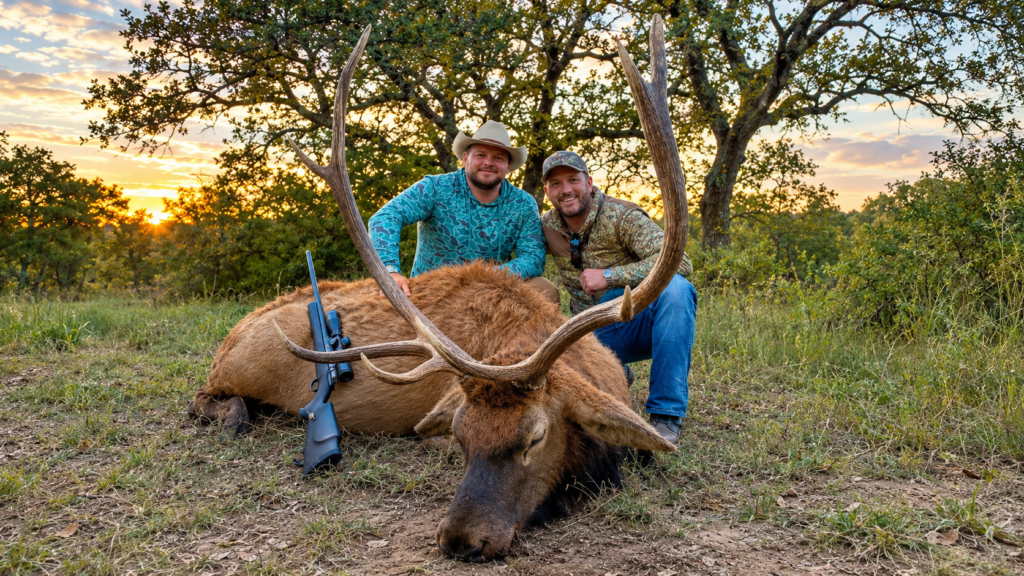
Axis bucks are judged primarily on main beam length and overall symmetry. A mature buck is generally considered a trophy once main beams reach around 30 inches, with truly exceptional animals exceeding 33 inches. Mature bucks can weigh over 200 pounds and share some behavioral traits with elk and red deer, including vocalizations during the rut that make them identifiable even before they’re in sight.
Axis deer have a reputation among Hill Country guides as one of the more alert, “switched-on” species to hunt. Their movement ties closely to water, food, and hunting pressure, which means spot-and-stalk approaches generally outperform stand or blind hunting — a different dynamic than most whitetail hunts, where a well-placed blind can do most of the work.
Ketterman Ranch — Between Marble Falls and Burnet
Ketterman Ranch sits in the heart of the Hill Country axis range, with the species among the more than 40 exotic animals introduced across its 1,228 private acres. Because the ranch operates as a members-only, exclusive-use property, an axis hunt here happens on private, undisturbed ground rather than a property shared with other unrelated hunting parties — a real advantage for spot-and-stalk hunting, where pressure from other hunters can make already-alert axis deer even harder to approach. Guided hunts are tailored to the individual hunter, and the ranch’s broader amenities — the Main Lodge, pool, and lake — support a full weekend trip built around more than just the hunt itself.
Other Notable Hill Country Axis Ranches
Texas Hunt Lodge (Kerr County). Operating in the county where axis deer were first introduced to Texas, this outfitter runs year-round guided hunts with flexible hunting styles — spot-and-stalk, blind, rifle, bow, handgun, or black powder. Trophy pricing is typically tiered by antler length, with bucks over 33 inches commanding a premium.
Sisco D Ranch (Central Texas Hill Country). This ranch specializes in trophy axis hunts backed by a guaranteed shot-opportunity policy, and recommends the May-to-August window for hunters specifically targeting hard-antlered bucks, while also accommodating velvet-buck requests for hunters with that preference.
All Seasons Guide Service (Hill Country, multiple properties). Operating across more than 65,000 acres spanning multiple properties, this outfitter offers some of the largest available hunting ground in the region, with options ranging from family trips with private river cabins to larger accommodations for corporate groups.
Comparing the Options
Ranch/Outfitter | Location | Acreage | Access Model | Notable For |
Ketterman Ranch | Between Marble Falls and Burnet | 1,228 acres | Members-only, private groups | Exclusive-use hunting, full resort amenities |
Texas Hunt Lodge | Kerr County | Private lodge grounds | Guided, public booking | Flexible hunting styles, tiered trophy pricing |
Sisco D Ranch | Central Hill Country | Private ranch | Guided, public booking | Guaranteed shot opportunity |
All Seasons Guide Service | Hill Country (multiple properties) | 65,000+ acres | Guided, public booking | Large land base, family and corporate options |
What to Expect on Texas Hill Country Axis Hunts
A typical guided axis hunt in the Hill Country starts early, since deer movement around water and feeding areas is most predictable near dawn and dusk. Given how alert axis deer tend to be, most guides favor a slow, deliberate spot-and-stalk approach over sitting in a fixed blind, though blind hunting remains an option depending on the property and the hunter’s preference. Shot distances vary by terrain, but Hill Country brush and rolling pasture often mean closer-range opportunities than open West Texas country.
Because axis venison is widely considered some of the best-tasting meat among exotic game — tender, lean, and mild — many hunters plan for meat processing as part of the trip, not just the trophy itself. Worth confirming with any outfitter or ranch ahead of time: whether field dressing and processing support is included, how trophy fees are structured relative to antler size, and what accommodations are available for a multi-day stay if the hunt is part of a longer trip.
Frequently Asked Questions
Is there a specific axis deer hunting season in the Texas Hill Country?
No. Axis deer are classified as an exotic, non-game species in Texas, so Texas Hill Country axis hunts can be legally done year-round on private land with landowner permission and a valid Texas hunting license.
When is the best time to hunt axis deer for a trophy buck?
Most guides recommend May through August, during the peak rut, when bucks are most active and carry hard, fully grown antlers rather than velvet.
What size makes an axis buck a trophy?
A mature buck is generally considered a trophy at main beams around 30 inches or longer, with exceptional bucks exceeding 33 inches.
Do I need a special license to hunt axis deer in Texas?
A valid Texas hunting license and landowner permission are required. Because axis deer are classified as exotic rather than native game, they fall outside the bag and possession limits that apply to species like whitetail deer.
Is Ketterman Ranch open to the public for axis hunts?
No. Ketterman Ranch operates as a private, members-only club, with a limited number of private or invitation-only hunts available outside its regular membership base.