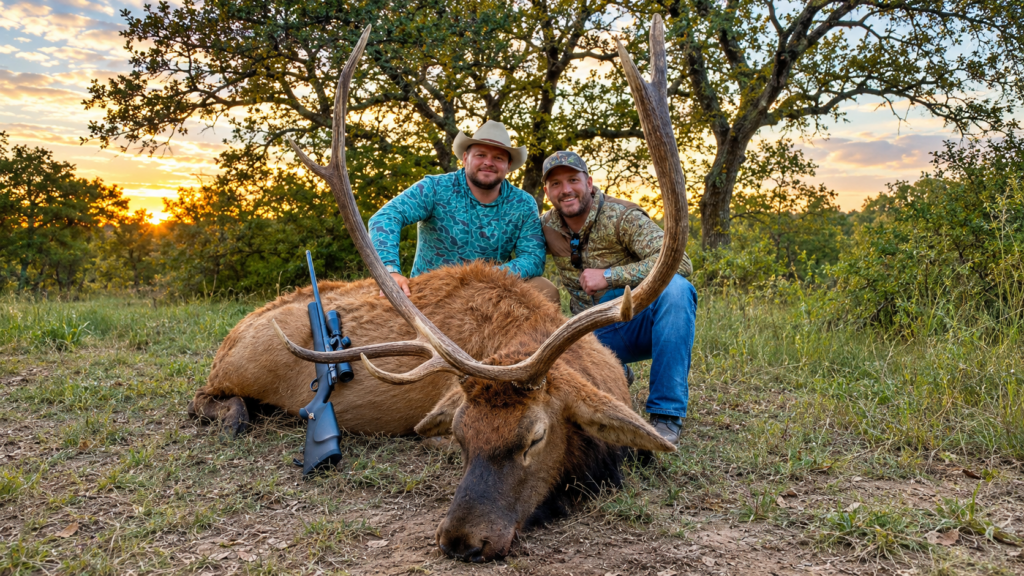
Hunt axis deer year round Texas — that’s the short answer many hunters are surprised to learn. If you’ve spent any time researching exotic game hunting in the Lone Star State, you’ve probably come across this fact: unlike whitetail deer, you really can pursue axis deer any month of the year.
No waiting for a specific season to open. No scrambling to plan a trip around a tight three-month window. For hunters used to the rigid structure of native game seasons, this often raises a follow-up question — is that actually legal, and what are the rules?
The short answer is yes, it’s entirely legal, and this guide breaks down exactly why, what regulations still apply, and what you need to know before booking your hunt.
Why You Can Hunt Axis Deer Year Round Texas
The reason comes down to how the Texas Parks and Wildlife Department (TPWD) classifies the species.
Axis deer are not native to North America — they originated on the Indian subcontinent and were first introduced to Texas in the early 1930s, with early releases traced to the Hill Country. Because they didn’t evolve here and aren’t part of the state’s native wildlife management framework, TPWD categorizes them as an exotic, non-game species.
That classification matters enormously for hunters. Native game animals like whitetail deer, mule deer, and turkey are managed under strict harvest frameworks: defined season dates, bag limits, tagging requirements, and reporting rules designed to protect breeding cycles and sustain healthy populations.
Exotic species don’t fall under that same regulatory umbrella. On private land, axis deer carry no closed season, no bag limit, and no possession limit under state law.
This isn’t a loophole or a gray area — it’s a deliberate distinction TPWD makes between animals it actively manages as a public trust resource and non-native species that are, legally speaking, treated more like livestock than wild game once they’re on private property.
The Biological Reason It Makes Sense
Beyond the legal classification, there’s a practical, biological reason why a rigid season wouldn’t make much sense for axis deer anyway.
Whitetail deer have a tightly synchronized rut and antler cycle, which is exactly why state seasons are built around a narrow autumn and early-winter window — that’s when breeding activity, and therefore harvest opportunity, is concentrated.
Axis deer don’t follow that same pattern. Their breeding and antler cycles are far less synchronized across the herd. While breeding tends to peak in the late spring and summer months, with fawns most commonly born between January and March, individual bucks can be found in hard antler, velvet, or shed stages at almost any point in the year.
Because there’s no single tight biological window that defines the entire population’s activity, a traditional whitetail-style season structure simply doesn’t map onto the species. This is part of why so many outfitters and ranches market axis hunts as available essentially any month you’d like to book one.
What Regulations Still Apply
Year-round legality doesn’t mean an unregulated free-for-all. A few requirements still apply to anyone planning to hunt axis deer in Texas:
- A valid Texas hunting license is required. Even though axis deer aren’t subject to season dates or bag limits, you still need a general hunting license to pursue them legally, just as you would for any other wildlife in the state.
- Hunter education may be mandatory. Anyone born on or after September 2, 1971, is required to complete a Hunter Education Course before a license will be issued. Most outfitters and ranches can point first-time hunters toward an approved option, including online or deferred certification paths.
- Landowner permission is essential. Because over 95% of Texas is privately owned, virtually all axis deer hunting happens on private property — a hunting lease, a managed exotic game ranch, or land you or a friend owns outright. You cannot hunt axis deer on private land without explicit permission.
- Local and property-specific rules may apply. While the state doesn’t set a closed season, individual ranches often set their own internal harvest guidelines, minimum trophy standards, or seasonal booking windows to manage herd quality. Always check with the specific ranch or outfitter you’re working with.
- Public land is a different story. If you’re hunting through TPWD’s Annual Public Hunting Permit or another public program, exotic species rules can vary by property, so confirm directly with TPWD before assuming year-round access applies.
Best Time to Hunt Axis Deer Without a Season
Just because you can hunt axis deer any month of the year doesn’t mean every month offers the same experience. Timing still matters for trophy quality and hunt success, even without a regulatory deadline forcing your hand.
Most experienced axis hunters and ranch guides point to late spring through late summer — roughly May through September — as the strongest window. This period lines up with peak rutting activity, when mature bucks are more vocal, more active during daylight, and more likely to be in hard antler with fuller racks.
Bucks chasing does during this stretch tend to move more predictably and are drawn more consistently to water sources, which makes spot-and-stalk hunting more productive.
That said, axis deer can be found in huntable condition throughout the year because of their staggered breeding cycle. Some hunters specifically target the cooler months of fall and winter to combine an axis hunt with other Texas hunting opportunities, like the native whitetail rut in November, since many ranches run mixed programs covering multiple species.
How This Compares to Native Game Hunting in Texas
For context, it helps to see how axis deer regulations differ from the state’s native species.
Whitetail deer, by far Texas’s most hunted animal, follow defined archery, general, muzzleloader, and youth seasons that typically run from September through February, depending on the region and weapon type. Mule deer follow their own separate season, concentrated mostly in the Trans-Pecos, Panhandle, and Edwards Plateau regions. Both species carry bag limits, and hunters are required to properly tag and, in many cases, report their harvest.
Axis deer, along with other popular exotics like blackbuck antelope, fallow deer, aoudad, and nilgai, sidestep all of that structure entirely on private land. This is exactly why so many hunters build trips around exotics — they offer flexibility that simply isn’t available with native game, letting you plan a hunt around your own schedule rather than a fixed calendar window set by the state.
Planning Your Axis Deer Hunt in Texas
If you’re ready to book a hunt, a little preparation goes a long way toward making it successful:
- Confirm your license and hunter education status well before your trip so there are no last-minute issues.
- Ask the ranch or outfitter about their specific harvest guidelines, since these often go beyond what state law requires.
- Consider the season for your priorities. If trophy antler quality and rut activity matter most to you, aim for the late spring through summer window. If you’re combining trips or prefer cooler weather, fall and winter are still very viable.
- Talk to your outfitter about terrain and tactics, since axis deer tend to be more wary and less predictable than whitetail, often favoring brush cover near reliable water sources.
The Bottom Line
Yes — you can hunt axis deer year round Texas, and it’s entirely legal thanks to their classification as an exotic, non-game species.
There’s no closed season, no bag limit, and no possession limit under state law when hunting on private property, though you’ll still need a valid hunting license, hunter education if applicable, and landowner permission.
While the flexibility is real, paying attention to seasonal patterns — particularly the late spring through summer rut — can significantly improve your odds of a quality hunt. Whether you’re planning around your own schedule or looking to pair an axis hunt with other Texas game, understanding these rules ensures you’re hunting both legally and effectively.